

Wednesday, April 11, 2012

Happy Meal Project - Sally Davies


Why We're Scared Of Happy Meals

By Kristian Laliberte
Art & Culture Refinery 29
New York, USA
Aug 26, 2010 4:00 PM

It's pretty much conventional wisdom that you don't head to McDonald's for a healthy treat. And, if you've seen Fast Food Nation, you'll know that the chain's offerings have got a whole lot of icky ingredients. Though we don't really like to think about that while munching on a Big Mac, NYC artist Sally Davies did, creating the Happy Meal art project that provides evidence that Mickey D's food really is the worst shiz you can put in your body. Davies took a Happy Meal sized burger and fries, put it on her living room table, and as Bravo says, decided to "watch what happens." She photographs said meal every day, and 137 days into the project (with no end in sight), the results are remarkable in the fact that they're really unremarkable. To our eyes, the burger and fries look exactly on the same on day 1 as on day 137. (As published Aug 26, 2010).

Today,  Davies  celebrates the second year anniversary of what is known as "'Happy Meal Project', by distributing in internet the daily photos that she takes of  the bread, meat and fries that she acquired 730 days ago.

Until now, the only changes observed is that the bread has become dry and broken into two in some parts, while the hamburger meat, after the first few days, became like a "stone" and had shrunk a little bit,  whereas the French fries maintained almost the same appearance.

Davies, in this way, defends that the food has experimented certain dehydration but has not initiated the process of putrefaction, indicating its poor nutritional values observing that  "the food does not rot nor decay with the passing of time".

Davies began her artistic career as a painter for more than three decades and her paintings have appeared in various tv series, like "Sex in New York", although her huge step in photography started more than 15 years ago.

Source:  El Mundo.es April 11, 2012.

I wonder how this will affect the burger sales from fast foods chains like McDonald's or Burger King.  We will probably hear about this topic from the nutritionists sooner than we expect.  But in the meantime, do not be hungry yet.

The real question asked is: why don't the buns mold? That's the really scary part, since healthy bread begins to mold within days. What could possibly be in McDonald's hamburger buns that would ward off microscopic life for more than two decades?

No normal animal will perceive a McDonald's hamburger bun as food, and as it turns out, neither will bacteria or fungi. To their senses, it's just not edible stuff. That's why these bionic burger buns just won't decompose.  Source:  Natural News

Monday, April 9, 2012

Unique Flowers from Thailand

Every year during the first weekend in February, Thailand celebrates itss the Chiangmai Flower Festival. This is Thailand's greatest flower show, featuring a parade of floats made with colorful flowers, beautiful Thai and hill tribe girls in traditional dress, a Miss Chiangmai Flower Festival beauty contest and loads of exotic plants and flowers on display.The city is awash with vibrant colors ranging from the electric orange and lilac colors of the bougainvillea to the velvety blossoms of petunias in all shades of pink, white and purple. The strident red of the poinsettias, bought by many at Christmas and New Years, is echoed by beds of scarlet salvias. Homes and shop owners alike line the city streets with colorful flower boxes. The sheer profusion of color that the flower festival and carnival brings to Chiangmai aptly gives the city its name “Rose of the North”. On all three days of the festival, prize blooms are on display at Suan Buak Haad near the city center. Every type of flower, miniature tree and orchid is put on display for the judges to choose the best of the species. Landscape specialists put on an elaborate display, which includes patios and waterfalls with exotic decorative plants and flowers.
Source:  All Thailand Experiences

Some of their native flowers are:

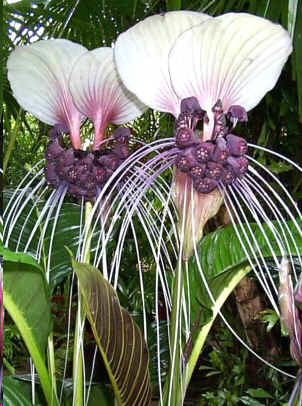
1) Bat flower white and Bat flower black: A very unusual species with black bat shaped flowers up to 12" across, and long 'whiskers' that can grow up to 28". Tacca chantrieri grow wild in the tropical forest  where they can get as tall as 36". These beautiful flowers grow best in well-drained soil and high humidity.  Source:  Van Bourgondiens' website.


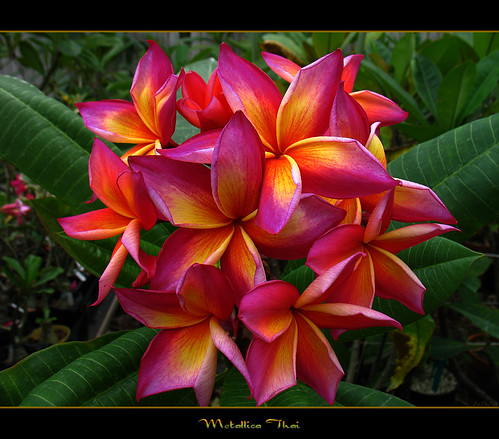
2)   The Plumeria Tree-  The plumeria, or frangipani, is a flowering shrub or small tree which grows in tropical climates. The plant produces white, yellow, pink or red flowers that range from two to four inches across. The flower is fragrant and waxy with five petals, each tucked under one of its neighboring petals and layered above the other. The leaves are large and leathery, growing up to 20 inches long and 3 inches wide. The plant needs a frost free environment to survive.FloriData: Plumeria spp. Common Species: Plumeria rubra; Plumeria obtusa; Plumeria pudicahttp://www.hear.org/starr/plants/images/search/?q=Plumeria       


The Plumeria Metallica Thai
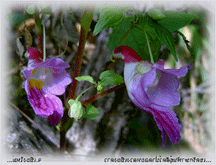
3) Parrot Flower, "Impatiens psittacina". Known to the people of Thailand as "Dork Nok Khaew". Impatiens psittacina Facts: Size: Plant grows to app. 6 feet (1.8) meters Leaf : Broad, sharply pointed, to 2 1/2 inches (6 cm) Flower size: App. 2 inches (5cm) Stem thickness: To 1/2 inch (1.5cm) Bloom season: October/November in Thailand Growing conditions: Tropical, humid, and moist. Source:  The Exotic Rain Forest.


Added to the wonderful collection of their orchids, Thailand, I would say is a beautiful country of flowers.

Saturday, April 7, 2012

Holy Week Celebration in the world

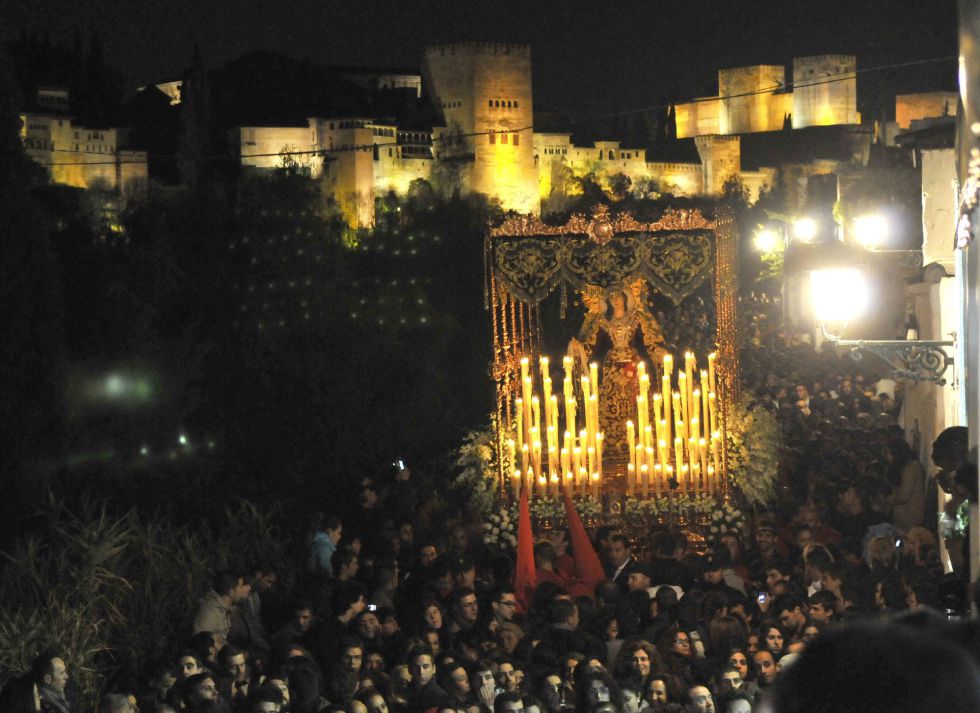
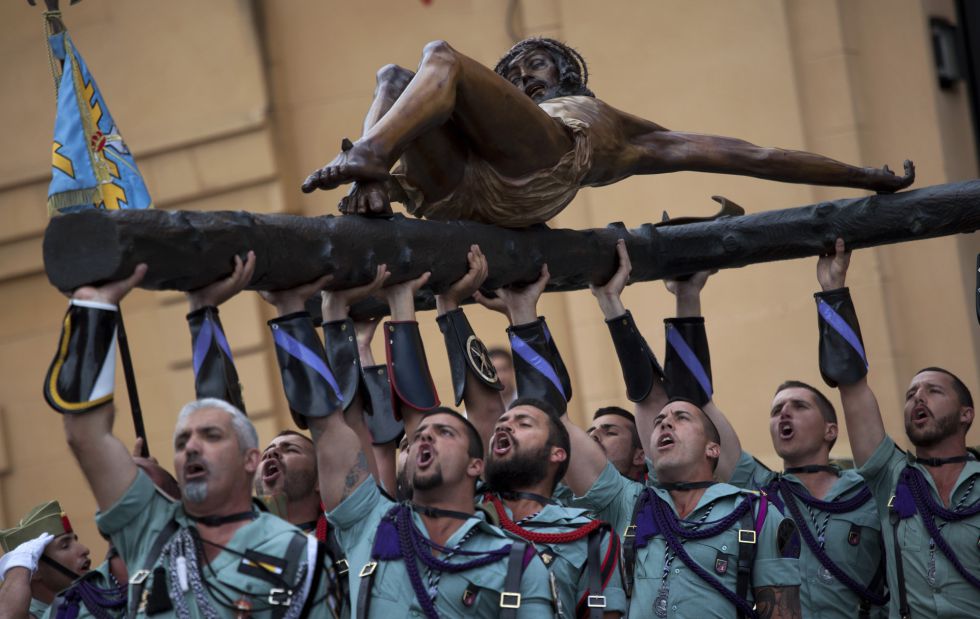
Spain celebrates Easter Week much more than most European countries. During the whole of Semana Santa, (Holy Week), street processions are organised in most Spanish towns each evening, from Palm Sunday to Easter Sunday.

People carry statues of saints around on floats or wooden platforms, and an atmosphere of mourning - which can seem quite oppressive to onlookers - and the Easter week processions end with Easter Sunday, a day full of light and colour when church and cathedral bells are heard ringing throughout the country.

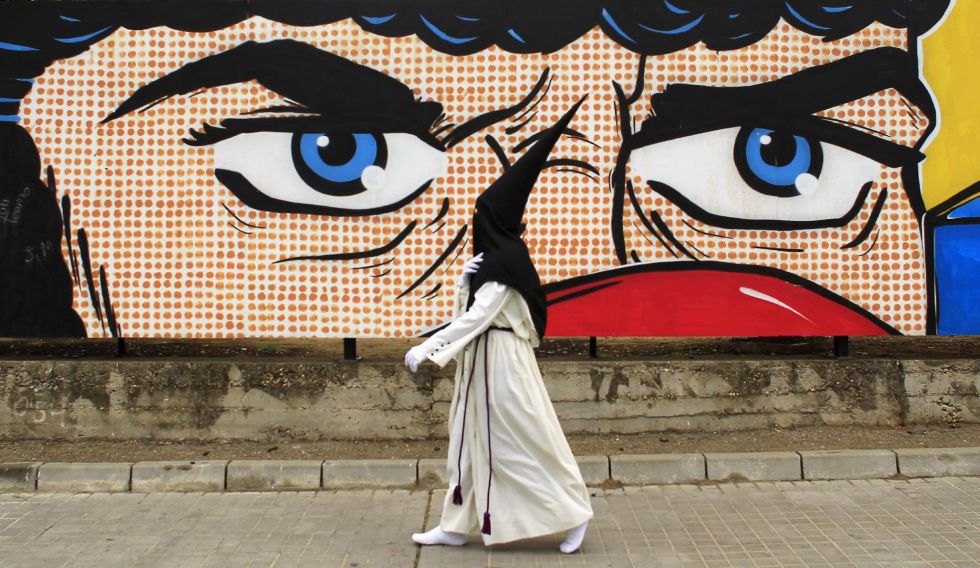
In some of the processions, marchers wear clothes reminiscent of the klu klux klan. Infact their clothes are meant to depict the Nazareños, people from Nazareth. The religious fraternities and brotherhoods are responsable for carrying the statues and organising the penitents and musicians. The Nazareños follow the people who carry the floats bearing sculptures and models of biblical scenes.
The people who carry the weight of the floats are called "costaleros" and are expected the carry these "thrones" with solemnity and grace. They use a small cushion, "costal" to protect themselves from getting sores from the wood rubbing against their skin during the long processions.
The most famous Easter celebrations are held in various Andalusian towns, Valladolid, Toledo, Segovia, Burgos, Zamora and Cuenca.
Source of text:    Euroresidents.  Source of images:  El País.

Here are some photos of the celebration.

Triana Bridge, Seville
Alhambra, Granada
Malaga

Penitent, Seville

Friday, April 6, 2012

Original houses

Here are some absurd houses, although others may call them original.


If you do not want any visitors, you can just cut off the wires. While ordinary people would likely use trees to surround their houses, but when you are weird, you use huge stones. Creepy, creepy, creepy.


Just the mere sound of the cracking of a branch will drive me nuts!
And that car, how did they manage to  get it  in there?


The tree below while the flowers on top, this is not too bad. But imagine having to go home to a place like the picture on the right after a long day's work!
    
    
Not when there is a hurricane, thank you.  And who cares for humidity?


My son loves bridges and he takes delight in taking pictures of different kinds of bridges, but I am sure he would think twice before buying a house like this. And my daughter will  certainly be "chilled" with the idea of living in an iceberg house like the one pictured above.

Ridiculous houses but highly imaginative, I would say.

Source:  Somebody with a tremendously powerful imagination.

Wednesday, April 4, 2012

Keukenhof, Spring Flowers Paradise


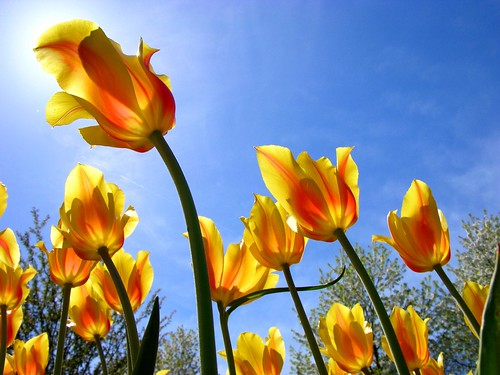
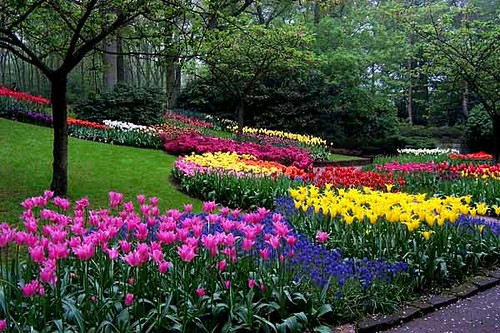
Holland is a tulips paradise, but there is a time and place when seeing them becomes an authentic symphony for the senses of color, scent and touch. The Keukenhof gardens, about 40 kms. from Amsterdam, is situated between Leiden and Haarlem.

There are about seven million different bulbs planted each year, including a wide variety of tulips, hyacinths, orchids, daffodils, lilies and crocuses. The tulip display is breath taking, with more than 700 different varieties of tulips.

There is also a large collection of sculptures and art scattered throughout the Keukenhof garden.

Lilypad Sculpture


The Keukenhof garden started as a kitchen garden of countess Jacoba Van Beieren in the 15th century on the grounds of the nearby castle Teylingen. Today the garden spans to 80 acres of flowers. (Source:  Netherlands Tour Guide)

You can breathe deeply, place one foot after another and enjoy the paths of these beautiful gardens. Bring your camera because in every turn of the way, you will find a picture to take a shot and remember.


It is highly recommended to visit, which is one of the unique corners of the world, but unfortunately, it can only be visited certain months of the year.  This year, the Kuekenhof gardens are open to the public 22 march to 20 may, 2012 from  8.00 a.m. to 19.30 p.m. daily (ticket office closes at 18.00 p.m.).Including all Sundays and public holidays.

Bus services from Station Schiphol leaves 12 times an hour. The Combiticket (busservices + entrance) is the most convenient way to begin your daytrip to Keukenhof. Bus services(busline 58 from Schiphol) to Keukenhof run 12 times an hour and stop directly at the park entrance. Plus you can avoid the queue, with immediate access to the park via a reserved entrance.
(Source: Kuekenhof Holland).


The entrance fee to Keukenhof is 14,5 € for adults and 7€ for children, but the money will surely be worth investing, because you will come out invigorated with life. Your life will absorb the colors of the park and will be impregnated with the scents of the tulips, so they say.


The gardens of Keukenhof, a flowers paradise, probably the most beautiful spring garden in the world.  Surely a place not to be missed in a lifetime.  Maybe to visit next spring?