Showing posts with label Beautiful Image. Show all posts

Sunday, September 13, 2015

Blue Moon July, 2015

There was a full moon on July 2 and last Friday, July 31, the second one appeared.  When there are two full moons in one calendar month, the second is described as blue.

The term blue moon,  has nothing to do with the color of our satellite,  but  refers to the succession of two full moons in the same month of the calendar, something which happens approximately every three years. In fact it is not blue. It is one full moon, like any other, of the same color as are most full moons: between pale gray, silver or milky white.  Here are two amazing photos of the Blue Moon.

People gathering to watch the blue moon rising over Glastonbury Tor.

  
Here, a group of friends pose like the Beatles as the moon rises above Penny Lane in Liverpool.


Read more:  Daily Mail 

The reason why it is possible to have two full moons in the same month is due to the fact that  the full moon cycle is approximately every 29.5 days.  If the full moon occurs the first day or the second of the month, it is more likely  that a second full moon would appear in the same month, what we would call a blue moon.

Does the Moon look blue?  In general, no. To make the moon appear with a  bluish tone copper, it  must be influenced by the ashes and smoke.  For example, in 1883, the explosion of the volcano Krakatoa (Indonesia) covered the clouds with ashes. The particles of ashes that absorbed a small amount of light tinted the atmosphere,  hence the moon could be seen as blue through the ash covered clouds.  Source:  Science Magazine Muy Interesante

The same was repeated in 1983, as explained from NASA, with the Mexican volcano El Chichón eruption. Source:  Hipertextual

Source of photo:  Hipertextual
We call the second full moon occurring in the same month as  blue Moon because of its rarity, as it is not an astronomical phenomenon that is usually observed.

The term Blue Moon actually had no scientific sense. James Hugh Pruett was the writer who baptized  the third full moon in a quarter that counted with four full moons.

Many cannot hear the expression without remembering a melody.  Blue Moon is also an American song by Richard Rodgers and Lorenz Hart, one of the many versions of a story by performers such as Frank Sinatra and Elvis Presley.

Thursday, September 6, 2012

Amazing Waterfalls in the World

Here are some beautiful waterfalls from around the world as published in facebook. Truly some wonderful gifts of nature!

Mikaduki Falls, Tamura | Fukushima, Japan
Emerald Pool, The Alps, Austria
Iguazu: Waterfalls Valley
Waterfall Castle, Poland
Waterfall Island, Alto Parana, Paraguay
 4-Tiered Waterfall in Australia 
Detian Waterfalls shared by China & Vietnam
Madakaripura Waterfall (East Java, Indonesia)
Waterfall, Orbaneja del Castillo, Spain
Colombian Coffee Triangle
Triple Falls, Glacier National Park, Montana


Saturday, May 5, 2012

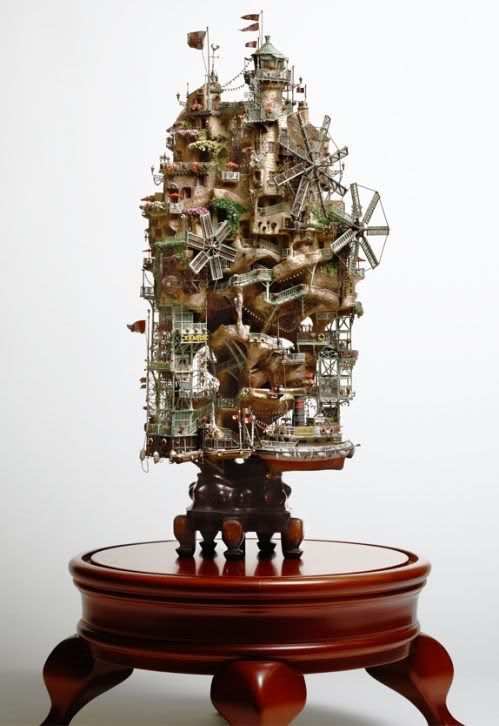
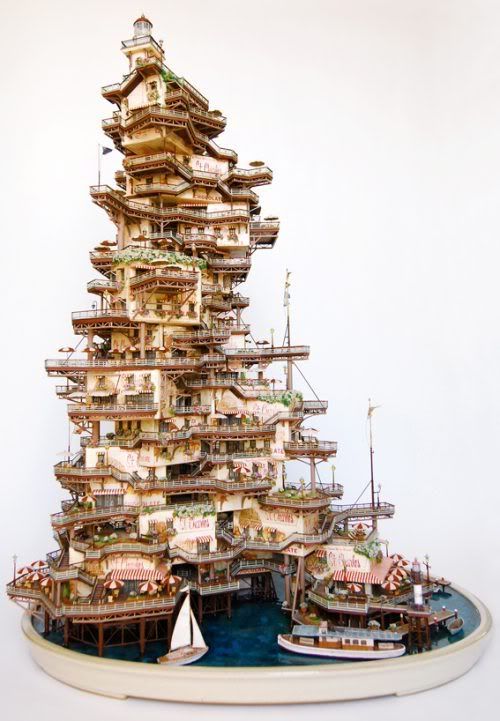
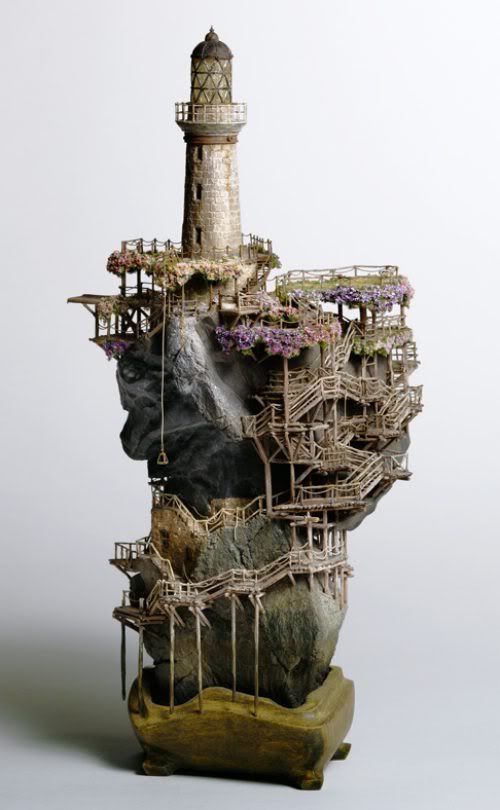
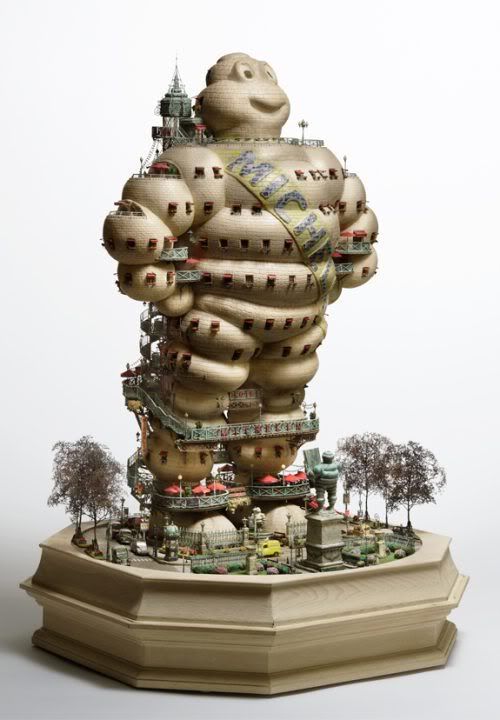
Takanori Aiba's Tree Castles

The Japanese art of raising bonsai trees is a beautiful way to infuse greenery into indoor spaces. But artist Takanori Aiba takes the art to a new level with his incredibly intricate series of bonsai castles. The Japanese artist carves miniature masterpieces that weave in and out of the miniature trees, creating cohesive architectural marvels that burst forth with life!

Treating each tiny Bonsai as if it were a deep-rooted full-sized tree, Aiba creates incredible buildings that wind around the boughs and branches. Using copper line, epoxy putty, plastic, resin and stone clay, he fashions detailed buildings, bridges, balconies and towers. Using the bonsai trees as the foundation, the dioramas are inspired by the unique shape of each tree, creating both vertical and horizontal landscapes and buildings.

Aiba’s first few creations relied heavily on the function of the bonsai as a tree. The plants hold tree houses, and the leafy branches of the bonsai poke out of the tops and cascade to the floor. Each branch is adorned with patios, umbrellas, and tiny strings of lights, creating an incredible dwelling for a miniature Swiss Family Robinson.  Source:  Inhabitat  by Lori Zimmer, 02/19/12.  Source of images:  Cúanta Risa.

For nearly a decade since the late 1970s artist Takanori Aiba worked as a maze illustrator for Japanese fashion magazine POPYE. The following decade he worked as an architect and finally in 2003 decided to merge the two crafts—the design of physical space and the drawing of labyrinths—into these incredibly detailed tiny worlds. Using craft paper, plastic, plaster, acrylic resin, paint and other materials Aiba constructs sprawling miniature communities that wrap around bonsai trees, lighthouses, and amongst the cliffs of nearly vertical islands.

Source of photos: Google Takanori Aiba


Truly amazing bonsai tree castles in a magical creation of a miniature living world.

Tuesday, October 4, 2011

The Colors of the Rainbow

Rainbow over Kansas
Photo:   Patrick Emerson
Rainbows

When the Sun is shining and there is rain as well, you may see a rainbow in the sky!

As sunlight passes through the water droplets, it is bent and split into the colors of the rainbow. Sunlight is known as visible or white light and is actually a mixture of all visible colors. Rainbows appear in seven colors because water droplets break white sunlight into the seven colors of the spectrum (red, orange, yellow, green, blue, indigo, violet).

You can only see a rainbow if the Sun is behind you and the rain in front. The main rainbow becomes visible at an angle of around 40" from the horizon. You might be able to see a second rainbow above the main one in which the colors are in reverse order. You can even make your own rainbow using a garden hose or water sprinkler to form the water droplets in the air on a sunny day.  Source of text:  Kids' Crossing

Rainbow over Melbourne
Photo: Jes

Double rainbow caught in black and white over Melbourne
This photograph proves that rainbows look stunning even in black and white. Notice the pronounced and dark Alexander’s band (the space between two rainbows so called after the scientist  Alexander of Aphrodisias, who first described the phenomenon).